


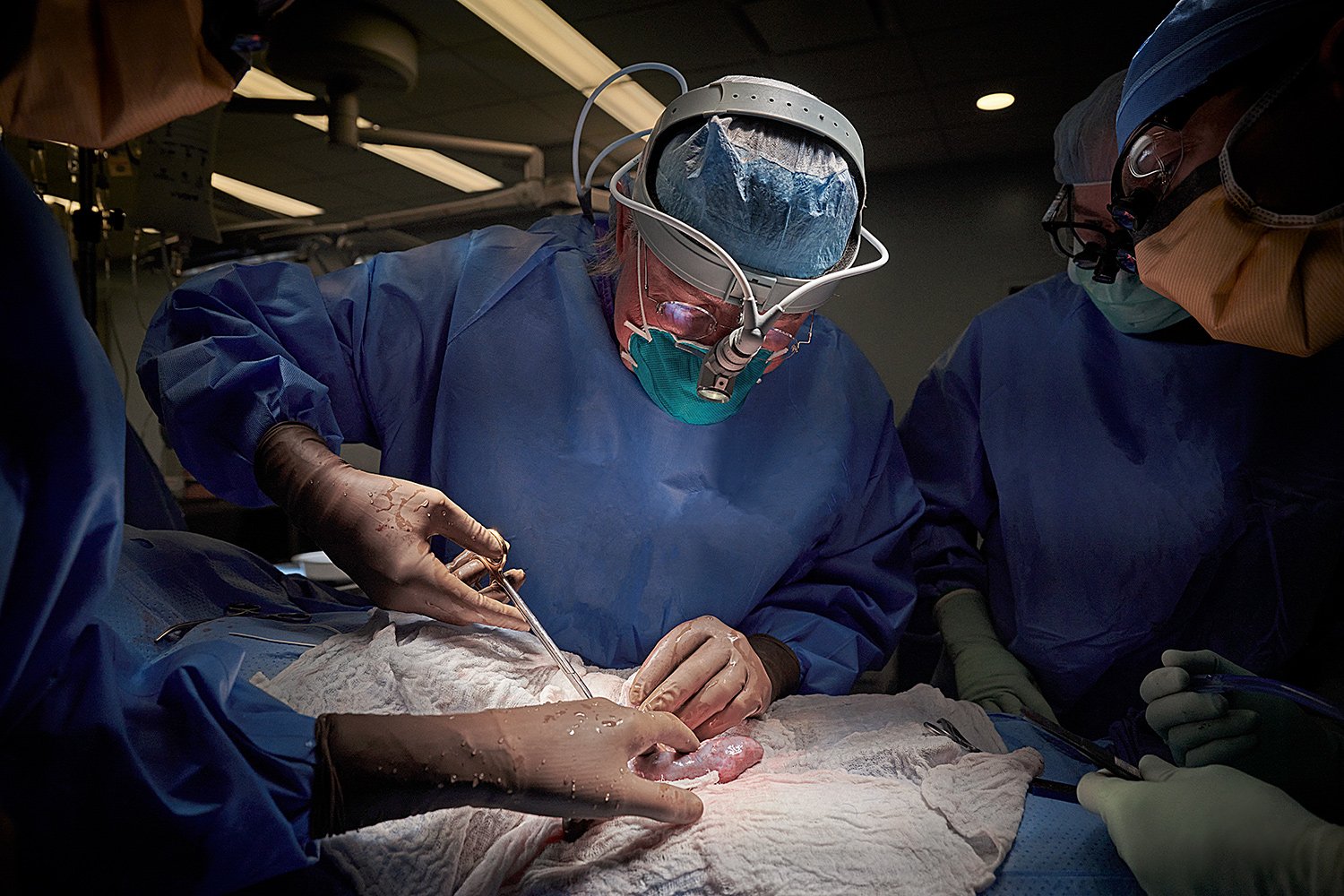

Xenotransplantation and organ donation are entering a new era thanks to the use of organs from genetically modified pigs. Since the first successful transplant in 1954, when Ronald Herrick donated an X to his twin brother Richard at Brigham and Women’s Hospital in Boston, the science has evolved. Today, xenotransplantation gives hope to the more than 100,000 Americans on waiting lists, while 17 die every day.
Xenotransplant Pioneers: Breakthrough Cases
In January 2025, 64-year-old Tim Andrews became one of the latest pioneers in this field when he received a genetically modified pig kidney at Massachusetts General Hospital. Andrews, who had been on dialysis for years, was discharged weeks later, marking a milestone in xenotransplant research. Another notable case is that of Towana Looney, who in November 2024 received a pig kidney at NYU Langone Health and, to date, is the oldest living recipient of this type of transplant. These procedures, still experimental, are performed under FDA "compassionate use" authorizations, reserved for patients with no other options.
However, the path has not been easy. The first recipients of pig organs, such as David Bennett and Lawrence Faucette, who received pig hearts in 2022 and 2023, respectively, lived only weeks or months. Similarly, Rick Slayman, the first living recipient of a pig kidney in March 2024, and Lisa Pisano, who received a pig kidney and thymus in April 2024, both died shortly afterward. Despite these outcomes, each case has provided crucial data, bringing the scientific community closer to the goal of making xenotransplants a viable solution to the organ shortage.
Science of Xenotransplantation with Pigs
Pigs are ideal candidates for xenotransplants due to the physiological similarity of their organs to humans. However, natural porcine organs face hyperacute rejection by the human immune system. To overcome this, companies such as eGenesis and United Therapeutics use technologies such as CRISPR to genetically edit pigs, removing genes that trigger rejection and adding human genes to improve compatibility. For example, eGenesis pigs have up to 69 genetic modifications, significantly reducing the risk of rejection.
Still, challenges remain. Porcine endogenous retroviruses (PERVs) pose a theoretical risk of cross-infection, although no cases have been reported in humans. Furthermore, patients require intensive immunosuppressive regimens, increasing the risk of infection. Ethical concerns are also significant: some question the breeding of animals for organs, while others see xenotransplants as a logical extension of the use of pigs for medical products such as heart valves or insulin.
Impact of Xenotransplant Pioneers
Every patient who participates in an experimental xenotransplant contributes not only to their own survival, but also to the advancement of science. As Dr. Robert Montgomery, director of the Transplant Institute at NYU Langone, said, these patients are “heroes” who take risks to help others. Data gathered from cases like Andrews’ and Looney’s are helping refine surgical protocols, immunosuppressive medications, and genetic modifications needed to make xenotransplants safer and more effective.
Future of Xenotransplantation and Organs
Although xenotransplants are in their early stages, the progress is undeniable. In 2024, the United States performed more than 40,000 human organ transplants, but demand continues to outstrip supply. Genetically modified pig organs could close this gap, offering an unlimited source of organs for those facing terminal illnesses. However, experts warn that years of research and clinical trials will be needed before xenotransplants become standard practice.
Meanwhile, the courage of patients like Tim Andrews and Towana Looney, along with the tireless work of scientists and physicians, is paving the way. As Andrews expressed after his transplant, “If this can help someone else, it’s worth it.” His legacy, and that of other pioneers, is a testament to the power of science and the human spirit to overcome the impossible.
